A quick note to thank everyone who has commented over recent times and to apologise for letting things slide lately. I have a lot I want to write about but what with medical dramas and psychic tremors and just – well – you know – the “real world”, wherever that now is – I haven’t been putting many art-thoughts down on paper, sorry, into the ether. Anyway, I promise to do better shortly. And thanks for all the visits! Meanwhile, here is another reminder of Paris. I have so many great images from last year’s trip, just hoping after some physical reconstruction there will be another one.
Palette of Eugene Delacroix, Paris, Musée Delacroix.
[I am cross-posting this to my writing site and it is also on Substack. I wrote a much longer piece responding to Brandon Taylor’s MINOR BLACK FIGURES post, but I edited it down and felt better for doing so. My proposed book PARIS VERTIGO, which is part-drafted and much-plotted already, is going to be completely refigured. Also I can see how much of my writing is in one way or another art-writing also, and so is Brandon Taylor’s.]
Brandon Taylor’s just published post Minor Black Figures on his Substack site, Sweater Weather (15th March 2025) is inspirational in so many ways.
I love this piece. It seems like a simple narrative but there is so much deepwork here. He writes about his own writing. He knows his topic. He is trying to write something that doesn’t want to be written. He is in a Citadines apartment in Paris, near Les Halles, all set to direct his errant creativity, until the occurrence of an inexplicable body horror: an eruption, a carbuncle, a papule which swells and grows without explanation on his inner thigh. He describes his confusion, trying to seeking medical care in a place where you don’t have the normal supports. You can feel his rising anxiety as the Thing throbs and expands until it bursts in a surge of blood and pain. And pus no doubt.
It was 2023. He was trying to finish a novel which he had been writing and rewriting, each time reaching a certain length (137 pages) until he had to throw it away and start again. Only after his grisly wound was drained was he able to return to his writing which suddenly became something different. His novel, Minor Black Figures, emerged,due to be published in October 2025.
I spent six weeks in Paris in 2024, staying in an old rental apartment. The entire city was going mad in preparations for the Olympics. I was working on a half-drafted novel, a kind of auto-fiction about my experiences in Paris in the early 1980s. It was about woman stuff and the post 70s painting scene and the rise of anti-theory and the “New Philosophers”. But I was too sick to write it, or it was making me sick. I was dizzy all the time and felt constantly confused. I couldn’t manage the stairs and corridors of the metro. The book I had planned refused to co-operate. Too many characters appeared and kept on doing contemporary things, like try to work out how to buy a travel pass from a digital dispenser in an apparently abandoned metro station. Instead of writing my novel I had a major panic attack in Le Petit Palais, a glorious art gallery full of lesser known paintings from the past three centuries.
Le Petit Palais, art gallery extraordinaire. Paris 2024.
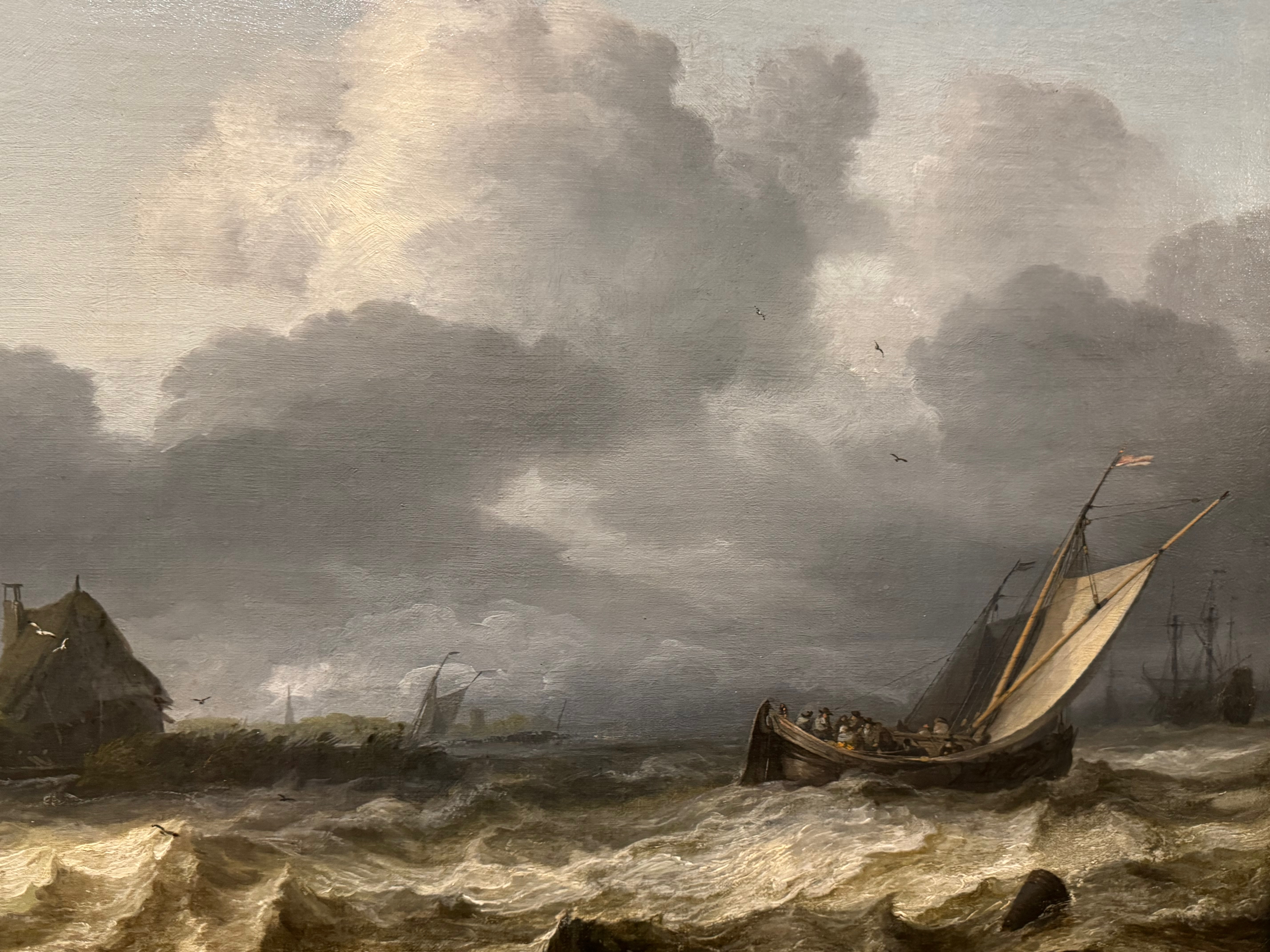
There were endless corridors of incredible old paintings. This was one of my favourites. I stood in front of it, wondering at how in the 17th century a virtually unknown painter had produced this picture from his own imagination (since there were no photographs then, remember, no image libraries, no Pixabay) and here it was four centuries later in Paris and so was I, and I couldn’t step away from it.
Allaert van Everdingen. L’Orage (The Storm): oil on linen, 1650.
But suddenly I knew I had to lie down, and there is nowhere to do that in Le Petit Palais. I started to panic. My partner shepherded me around with rising anxiety. I said we had to leave at once. Outside, a set of metal barriers had appeared and no vehicles were allowed to stop in front of the building, or anywhere near it. Police were patrolling up and down. Where to go? What to do? I panicked even more. After what seemed like hours we managed to get back to the apartment. I decided I had to just stay home for a while and not go near that book I had come here to write.
It definitely did not want to be written. It was full of my usual preoccupations about mothers and daughters and trauma and inter-generational rivalries. After a time I decided I had to find a doctor. It was so easy! An amazing midnight home visit by a local doctor provided a diagnosis of a mystery virus and consequent high blood pressure. He gave me a script for some magic pills which were procured next morning from the Green Cross pharmacy across the square. I felt better but still couldn’t write anything other than my diary.
After that, I went back to Sydney and thought maybe my book should be about having a panic attack in Paris. It could still be about that early 1980s era, but instead of a “normal” novel it would be a memoir of the present superimposed on a certain past which may, or may not, have existed in its recollected form. I realised I could salvage my original title, Paris Vertigo, which was perfect for this purpose. It could be any length: a Substack piece, a novella, a novelistic memoir. Not a poem, though.
It would probably push aside my daily diary writing, which in any case is no longer daily, and never has anything very interesting in it because I never have time to write it properly. I am so over-committed. So why not add one more probably unachievable task? Brandon Taylor’s Paris story inspired me to think it might be possible.
BELOW: The lobby of the Hotel de Nice, where part of the story of PARIS VERTIGO takes place.
I have just set up my new Substack page: please visit and subscribe, it is free, there is no paywall and it is available for comments or discussions either on the post or in the pages.
I have chosen this painting as the emblem for the site .
The painting is held in a private collection. Oil on canvas 56.2 x 100.5 cm. c. 1892.
Best known for his vivid landscape paintings especially images in and around Sydney Harbour, Streeton was also a skilled genre artist. The painting above seems to have disappeared from public recognition, as it does not conform to the normative narrative about Streeton’s paintings. The way paintings exist in the public sphere, and then disappear from it, is one means by which art can become fugitive. Artists also think about fugitive colors, a well-established problem in oil-painting. Many well-loved colors used by artists over the years are fugitive: that is, they appear rich and strong when first painted, but over time and in unstable conditions they can lose definition and fade away.
Much art-writing is like this: our responses to art change so much, both personally and in terms of the Zeitgeist. A new generation is re-discovering forgotten art, sometimes bringing back genres and styles long considered old-fashioned and discredited. Here is a place for people who love and appreciate painting, who engage with art history and think about technique, to express their understandings. Neglected artists and art-styles, the commercial practice and presentation of art, appreciation and critique find a home here.
My Substack site is dedicated to recovering the fugitive in art, revealing the obscured, refinding the rejected and appreciating some of the strands of thought, mind and materiality which go to make up the world of painting.
Substack is a subscription model for writers who don’t want to be published under today’s conditions of mass stupidity and bad faith – people who are sick of being unable to express their views without editorial intervention and unwarranted censorship. It is especially good for displaced journalists and writers who can no longer find anyone to publish what they write. As newspapers have either disappeared or become completely irrelevant, there is no basis for a reader community around any particular writer of the kind which used to happen in the old newspaper days.
This of course destroys the possibility of criticism, as we have understood it, and thoroughly silences “public intellectuals” which you may think is the intention if you are a conspiracy theorist as we all must be these days. Substack offers a way for displaced writers and refugee journalists to go on writing things that readers want to read and to make a living from it. While a number of Substack writers offer free material, most have a paywall.
I started with Substack a short time ago and not long afterwards cancelled it. I really didn’t like the paywall, where the reader was drawn into following someone’s writing only so far and then had to pay $6 or $8 or whatever per month to keep reading. Now this mightn’t seem much, but these days if you have three, four, five, or more subscriptions for streaming television which you just cannot live without, there isn’t much likelihood that you can afford more subscriptions for individual writers. I cancelled my original Substack when I discovered it was almost entirely US based and consisted of an alarming amount of personal whingeing and moaning and stuff about healing and self-development. However John McDonald has led me to change my mind and I opened a new Substack using a different email address.
Substack offers a place where criticism can exist. Many people don’t like critics. In these delicate times, criticism is understood as hostility or attack, or, at the very least, it is dismissed because “it is just that person’s point of view”. Now that the Real has been displaced and Truth is considered an absurdity, the very idea of criticism is an insult to delicate sensibilities. The Sydney Morning Herald has seemingly embraced this damp Zeitgeist enthusiastically, and in the process dispensed with John’s services.
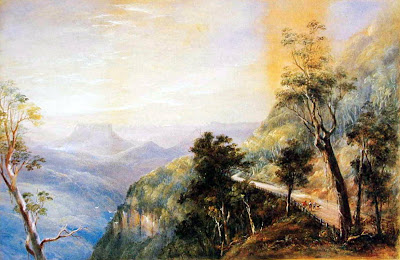
Art critics have always had a particularly hard time of it. Often they didn’t seem to have any idea what they were writing about, but I followed John McDonald, who wrote a coruscating prose based on a profound understanding of painting in particular and its role in Australian culture and history. John was once the Curator of Australian Art at the National Gallery in Canberra until he fell out with the director Dr Brian Kennedy over the purchase of Eugene von Guérard’s monumental Govett’s Leap and the Grose River Valley. How much I adore that epic romantic painting. It’s one of the main reasons I moved to the Blue Mountains. But that’s another story.
Above: Eugene von Guerard. Govett’s Leap and Grose River Valley. 1873. Oil on canvas, 68.5 x 106 cm. NGA 2000.53.
John was Sydney’s most thoughtfully outspoken art critic. I never failed to read his columns. I was especially impressed by and grateful for the way he championed the art of Elisabeth Cummings over the many years when her spectacular art was almost entirely overlooked in mainstream public contexts. (See my comments here: https://annette-hamilton-art-writing.com/tag/elisabeth-cummings/) John McDonald was one of the few who truly grasped the importance of her painting.
He also ran his own website and distributed a newsletter, but I did not subscribe because … well, because I thought I would read it in the paper… but I completely stopped reading any Australian journals or newpapers other than the Blue MountainsGazette around two years ago. Only when I saw a flurry this week about his sacking from the Herald on Instagram did I realise I hadn’t read his column in ages. I do have access to a digital version of the Herald but I hardly ever read it.
Until recently, if you didn’t regularly buy or subscribe to the Herald, you could read John’s pieces at his website from which he issued a Newsletter.
That site is still up and is absolutely full of gems about the Australian art scene over recent decades. I strongly recommend it for a good read.
BUT from last week, 17th October 2024, John is writing on his own Substack and has announced this change of address officially to@ jmcdartcritic. I signed up right away as a paid subscriber. This is exactly what a paid subscription is for – so someone can go on being a public intellectual or writer with an audience who follows and hopefully engages with them.
I hope lots of people sign up, and will also engage in some sensible and meaningful discussion of Australian art via the site. I just hope there are ways of keeping trash and trolls off it.
It’s been a long time between posts on this site and I want to apologise. I have been increasingly absorbed by the experience of painting. My own painting has been moving in difficult directions and has raised all kinds of issues about art itself and the value of “doing it” as against just looking at it, or writing about it. I hope to take this up this up more in future posts. I have also neglected the still undeveloped site at annettehamiltonartist.com which has lain idle in the welter of activities. I have been fortunate to attend a number of classes and workshops with great old-school painters and I have continued work mainly on landscapes focussed on the Seven Valleys of the sandstone mountains. More or less at the same time I have gone back to my paintings based on the desert interior around Broken Hill.
My art site is being updated now, visit there for more of these works and recent reflections on painting.
Stunning light in the Megalong Valley: working on an oil of this scene
The Last of the Bitumen: Mundi Mundi, near Silverton: trying this one in acrylic
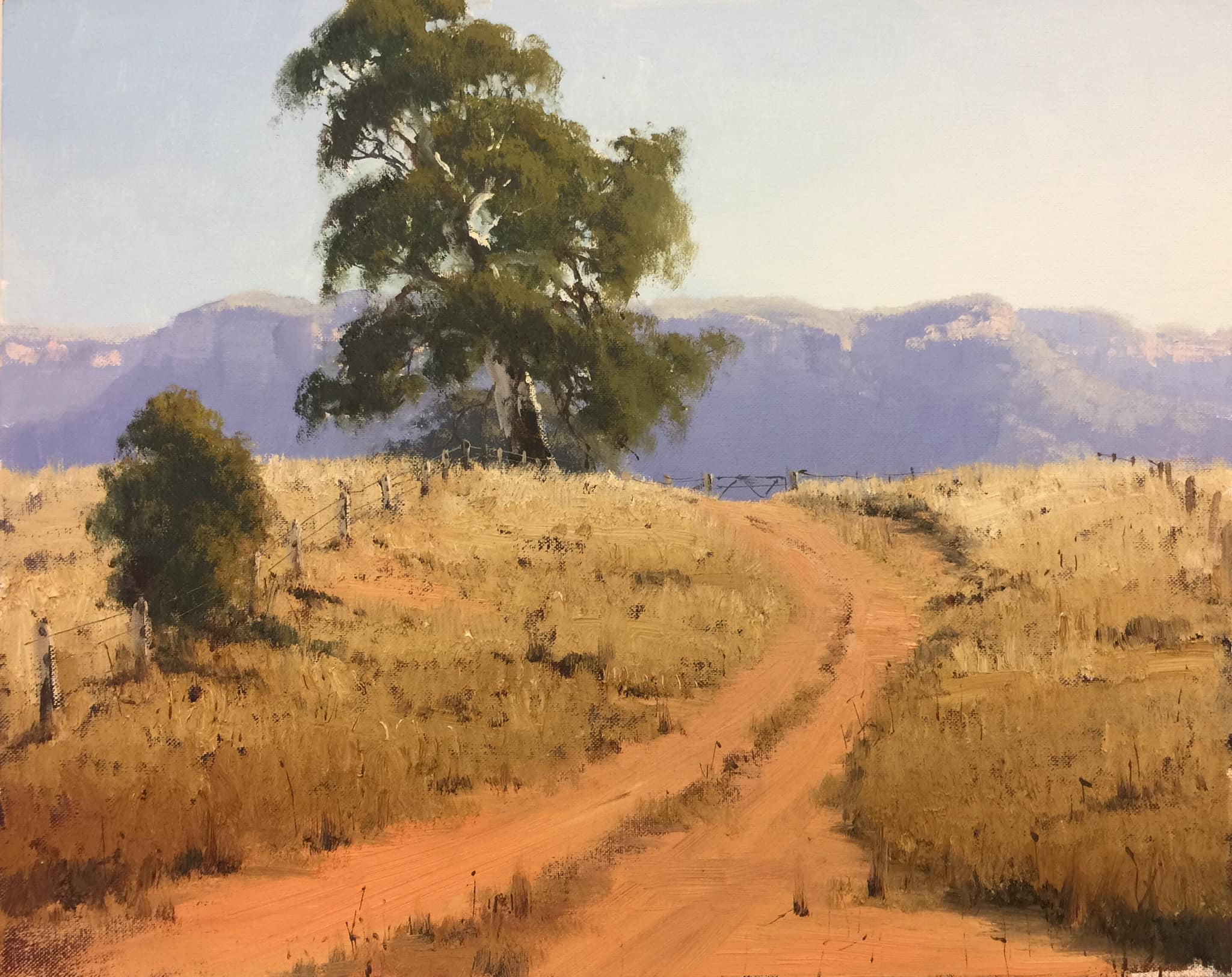
John Wilson’s stunning oil of road and trees in the Capertee Valley: I attended his workshop at this site in February 2021
My version of the same scene after rain: so much was wrong with it!
BY THE WAY: (Some self-promotion)As many of you know I have been pursuing my writing “career” over the past several years. Visit my writing site for further information and updates: annette-hamilton.com
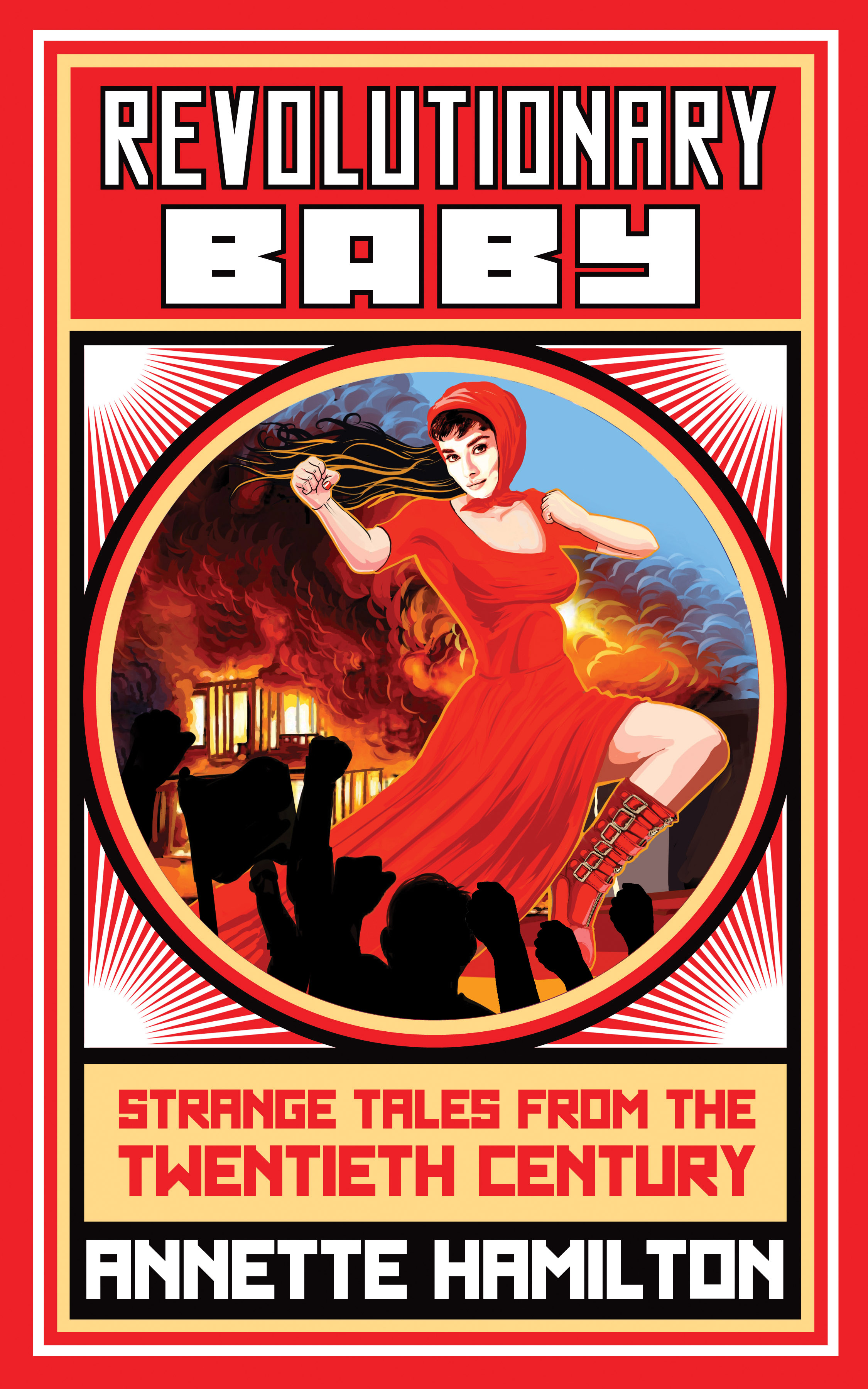
My new collection of short stories, Revolutionary Baby, has appeared. It is available online from any e-book supplier for any device (Kindle, Kobo, Apple, Nook).
The paperback version was published in early August, and is now available for order from Amazon or other online retailers. Or, visit your local bookshop and put in an order. If it isn’t listed at your local library, ask them to purchase a copy, it is listed for Australian library purchases via Ingram Spark.
For more about the writing side of things visit my writing site annette-hamilton.com
The banner headline above this post is from a remarkable watercolour of the Capertee Valley by Conrad Martens. So many artists have been fascinated by this remarkable place with its strange landforms and brilliant light. I will write more about Marten’s painting in another post.
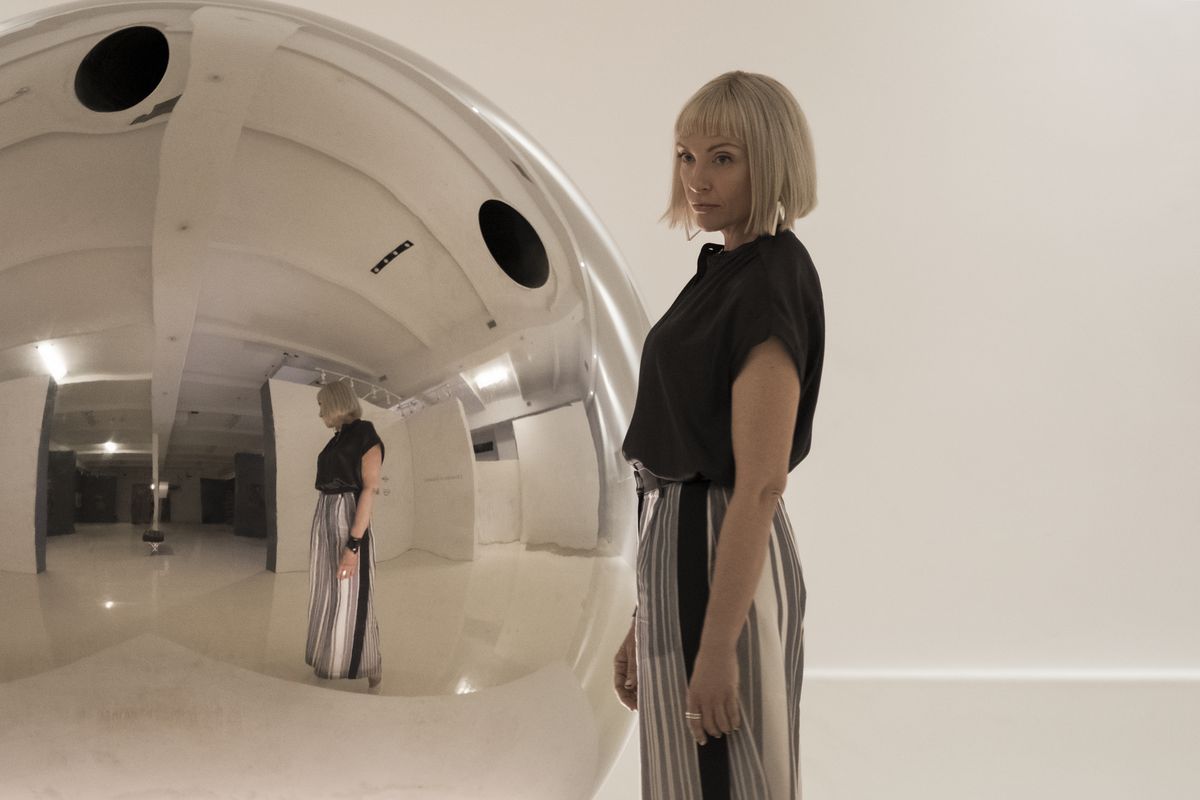
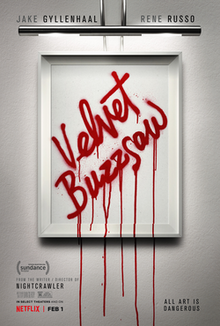
Toni Collette comes to a gory but artistic end in Velvet Buzzsaw
I love movies about art and artists. There never seem to be enough of them. I know they are often cheesy and the art is fake and the stories are inaccurate or overblown or just plain wrong, but it’s so rare to be able to enter the world of art at a visual level apart from going to galleries or looking at pictures online. Even the good movies can be hard to come by: they often have short releases and disappear completely unless you are old school and collect DVDs.
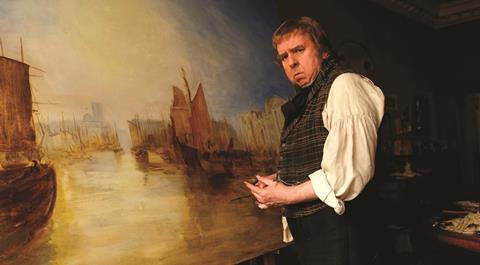
Mostly they are biopics. A recent unexpected hit was Mr Turner (2015), an interesting attempt to explore the art through the strangeness of the man.
Was Turner really such a sourpuss?
Other titles since 2000 include Frida (2002), Modigliani (2004), El Greco (2007), Shirley (2007), an attempt to bring to literal narrative some of Edward Hopper’s paintings. Probably the most famous movies (and books) are those about Vincent van Gogh, including the recent At Eternity’s Gate, with Daniel Defoe in the role (2018). Haven’t seen it yet, but no doubt will do so soon (and write a review).
Velvet Buzzsaw is something completely different. It is a kind of horror film, a kind of parody, a kind of postmodern fantasy and a trenchant critique of the excesses of today’s art world. A remarkable cast includes Toni Collette styled after a famous (real) museum director, Jake Gyllenhal as the awful but powerful art critic Morf and Rene Russo as the art dealer. It is also a great outing for British actor Zawe Ashton, playing Josephina, the only likeable character in the ménage.
The Variety reviewer calls it “a tarted-up throwback to a certain kind of trashy ‘70s horror movie”. As a dedicated fan of trashy 70s movies, I disagree. While writer-director Dan Gilroy uses some of the tropes and gestures of that genre, he is also offering more than cheap thrills. Just as his creepy and unforgettable film Nightcrawler forced us to focus on what it means to “get the picture” (in that case, video footage of ultra-violent late night events in Los Angeles) VelvetBuzzsaw insists on the bizarre linkage between art, consumption and the ultra-wealthy elites who circulate and control the market in art and who destroy art (and truth) in the process.
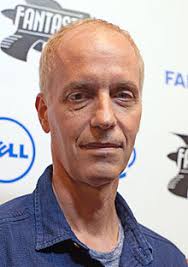
Director Dan Gilroy: he doesn’t look happy either.
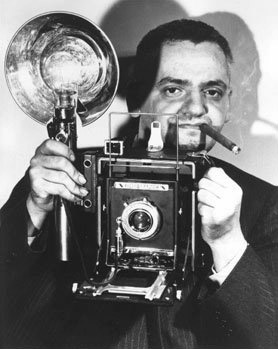
It is interesting that Gilroy originally wanted to make a film about Weegee, a crime photographer in New York in the 1930s.
Weegee was known as “The Father of Crime Scene Photography” and after being considered a weird outsider for decades he is now being recognized for his major innovations in photography, documentary and journalism. What he has in common with Gilroy is that he shows the kind of horror which everyone wants to see – a desire they can’t admit to. This would have made a fine follow-on from Nightcrawler but the logistics of recreating the era which calls for a brutalist noir approach would have been difficult and the result might have been too much altogether for the contemporary movie audience.
What matters to me in Gilroy’s work to date is that he is exploring the consumption of images, art, photography and the unconscious. He is tracking something about the hidden (or not-so-hidden) truths behind the emergent forces created by contemporary excess-capitalism. Art and media representation collide along a continuum of cruelty and inequality. The viewers want the gore: the super-saturated world of elite wealth and good taste masks a limitless violence against art in its deepest meaning. Although elements of the film jarred somewhat and the idea of a dead artist’s works having a kind of demonic intention is a bit OTT, see the film for its inventive depictions and wonder how much further the art world can go with its exuberant destruction of the concept of value and its embrace of very expensive cheap thrills. For Netflix fans, Velvet Buzzsaw is streaming now (February 2019).
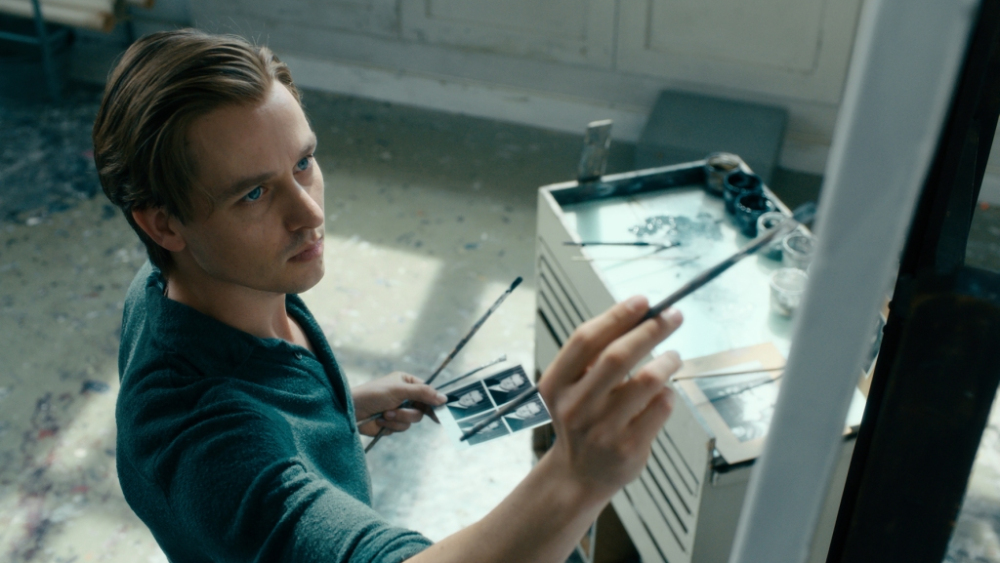
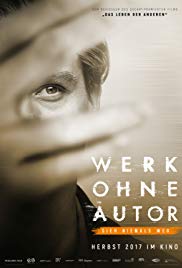
Film Still used to advertise Never Look Away, 2019 release in the US
Gerhard Richter is the towering figure of contemporary European art. You’d never know it in Australia though. Apart from the brave retrospective at the GOMA in Brisbane (October 2017-February 2018) Richter’s art and reputation barely registers here. One can speculate about the reasons: his early art was weird (he painted full-scale black and white oils which were blurry copies of old photographs), his landscapes were almost abstracts and then when he started painting abstracts they looked like landscapes) but quite apart from the art, he has never comported himself like a suitably glamorous and dramatic/exotic figure and of course there is the contemporary sticking point, he is an old white male and a German at that.
Richter was born in 1932 and spent his boyhood in obscure Lower Silesia, now Bogatynia, Poland, and in the Lusitian countryside. The family moved to Dresden where his father, a teacher, struggled under the emerging Nazi education system. He was forced finally to join the Nazi party. Gerhard aged 10 was conscripted into the Hitler Youth but was too young to be an official member. Somehow the worst effects of the war passed the family by, and Gerhard was able to study at the Dresden Academy of Fine Arts, where his first application was rejected because his work was too “bourgeois”. Now he was living under the DDR, but managed to escape to the West two months before the building of the Berlin wall.
So, an early life under the shadow of the Nazis and the Commies, then freedom in the West and a dazzlingly successful career in art. So has gone the accepted story. Richter has been extremely protective of his privacy and although he has given many interviews and written his own books (wonderfully stimulating books) he has never strutted the stage as the kind of glamour boy which the art world so adores. He hasn’t been a drug addict or murdered anybody and he has nurtured his reputation by judicious management and with a quiet sincerity which is so against the grain these days.
Perhaps this reticence has aided his growing reputation. As the international art scene became big business in the new millennium a strange phenomenon occurred: the older and quieter Richter became, the greater and greater were the sums being paid for his work. Richter has become beyond collectible. In 2012 one of his Abstraktes Bilde set an auction record for a living artist at $34 million US. In 2013 his 1968 piece, Domplatz, Mailand sold for $37.1 million and in 2015 another Abstraktes Bild sold for $44.52 million.
Richter himself has watched this bizarre development with no little distress. These staggering prices do not go to him, of course, but to whoever had the foresight to buy his work earlier. He has described the situation as “absurd” and “daft” in 2011.
As this huge and unstoppable process continues, he has been saying less and less about it.
But now everything has changed. In this age of self-curation and self-revelation, everyone has to have a narrative and they have to share it with the world and if it contains a lot of bad stuff so much the better. For some unknown reason Richter permitted famous German film director and Oscar winner Florian Henckel von Donnersmarck (The Lives of Others, 2006) into his life and thoughts. For weeks they met and Donnersmarck recorded candid conversations with Richter about his life, on the understanding that the resulting screenplay would be “fictionalized”. The film, titled in German Werk Ohne Autor (Work WithoutAuthor) was released in Germany in 2017 and while its central character is not called Gerhard Richter and none of his actual paintings are shown (one of his assistants was hired to paint pictures like them for the movie) everyone is referring to it as the biopic about Richter. Now it is about to be released in the US, although at this date (January 2019) there has been no release planned for the UK or Australia.
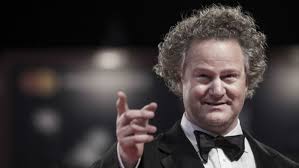
Director Donnersmarck, 2018
What did he imagine would happen? Perhaps it speaks to the naivety of an older person about the operations of the new technologies of knowing (of knowing everything about everybody all the time whether they like it or not) or perhaps he trusted Donnersmarck as a fellow-artist. But the resulting film has resulted in a scandal of a horrible kind. No, it’s not allegations of sexual impropriety or dirty secrets, it’s somehow worse than that.
It turns out that between 1937 and 1967, while Richter was consolidating his art practice and developing his early career in East Germany he was benefiting from the support and patronage of his first wife’s father, a former Nazi officer who worked in the euthanasia program. One of Richter’s most famous early monochrome blurred photo-paintings “Aunt Marianne” is based on an image of his aunt, who was herself captured, sterilized and executed as part of the euthanasia program.
Tante Marianne, 1965: Oil on canvas 100 x 115 cm
Richter is very angry and upset about these revelations. He rightly judges that the fictionalization will become the truth. He has repudiated both film and director, although Donnersmarck says he hasn’t even seen the film yet, only the trailer. Never Look Away has been nominated for an Oscar and for the Golden Globes, and will be released in the US shortly, so everyone will be seeing it soon.
Donnersmarck’s film is an act of provocation, both to the art world itself and to the continuing German reluctance, or refusal, to face up to the realities of the twentieth century past. More and more films focusing on this issue have been emerging lately, and this can be seen as just another in the series. By putting this world-famous artist’s story, even in disguise, at the centre of an ethical demand it creates a compelling focus for the kind of coming-to-terms with the past which every Western nation needs to undertake. The role of art in collective self-recognition, and its role in the revelation of trauma under the unfolding of historical events, has never been more compelling. In a way Donnersmarck’s films make the psychoanalytic demand: live in the register of Truth!
Has Richter’s famous privacy been an effort to cover up or disguise his entanglements with German history? If so, why has he made these revelations to a film director famous for his work in disrobing historical disguises? Did he really think such a film would not be “about” him? Or is there some inner compulsion at work, where his own reality is demanding a release? In some ways the whole situation reminds me of what happened when Martin Heidegger’s “Black Notebooks” were published recently. Right-wing critics and philosophical conservatives went through them line by line, trumpeting “See we told you all along he was a Nazi” as if this disproves the validity of his writing and hence the whole of contemporary leftist philosophy.
Is this about to happen to Richter and the “value” of his art? Or will it only make it more valuable?
But there are more profound questions here. Is everybody always responsible for decisions they made in the distant past when everything was different including the meaning of behavior? Was Richter wrong not to denounce his wife’s father? How much did he in reality accept from her family, to what extent is his present success the result of these murky antecedents? Has his whole life been a kind of cover-up? And isn’t everybody’s?
Poster advertisement for the German release
In the poster for the German film (above) we are confronted with a beautiful young man who seems to be hiding behind his own blurry hands. This is the director’s message, perhaps. I haven’t seen the film and I look forward to it. At over three hours long it probably won’t receive a release in Australia but who knows, maybe SBS will get some cojones after the next election and go back to its original mandate.
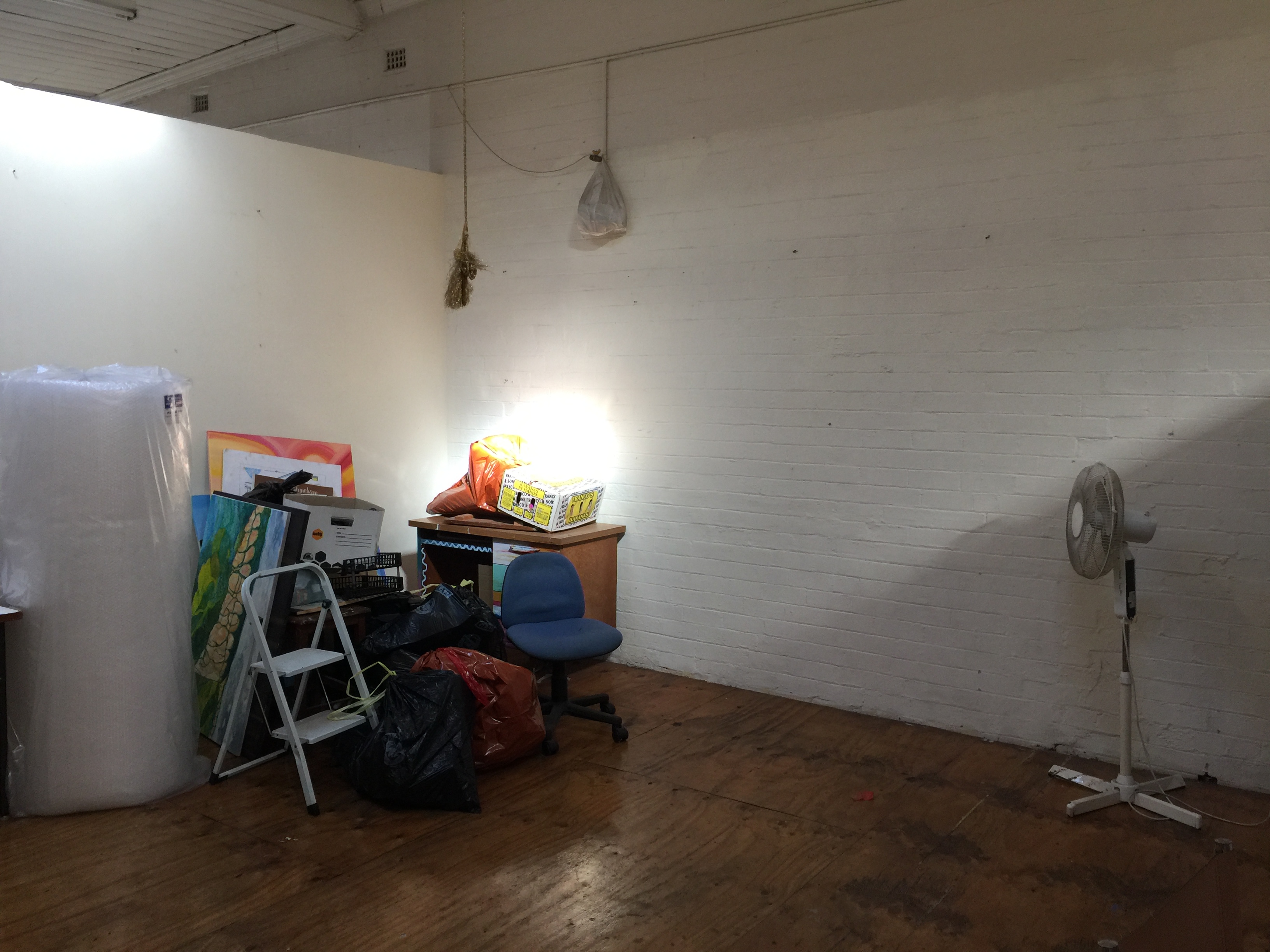
Was broken-hearted (and as everyone now says, blind-sided) to discover that we had to vacate Glenrowan after a scant six months and so say farewell to the beautiful new studio space I was so looking forward to using. I have to report that I never painted one single picture in it. That was in part due to health reasons, but have been thinking that maybe it was just too perfect to work in. And also too small. Strangely I don’t seem to have any photographs of it.
It is so difficult to find a great studio, or even just a satisfactory one. I now have the use of a good-sized room in my daughter’s new house round the corner from here. It is a good space, but right near the living and cooking areas of the house and I don’t want to use solvents there. This has led to a surprising decision: have decided to start working in acrylics for a while.
Also thinking about doing a lot more large-scale drawing/mixed media work – great for bushland scenes – and maybe exploring the water-based wax paint further. In my last post I put up some of the gorgeous flower photographs I took in spring last year. These may be worth trying in both acrylics and wax-paints. Again, though, I need the studio set up properly with good light and furnishings.
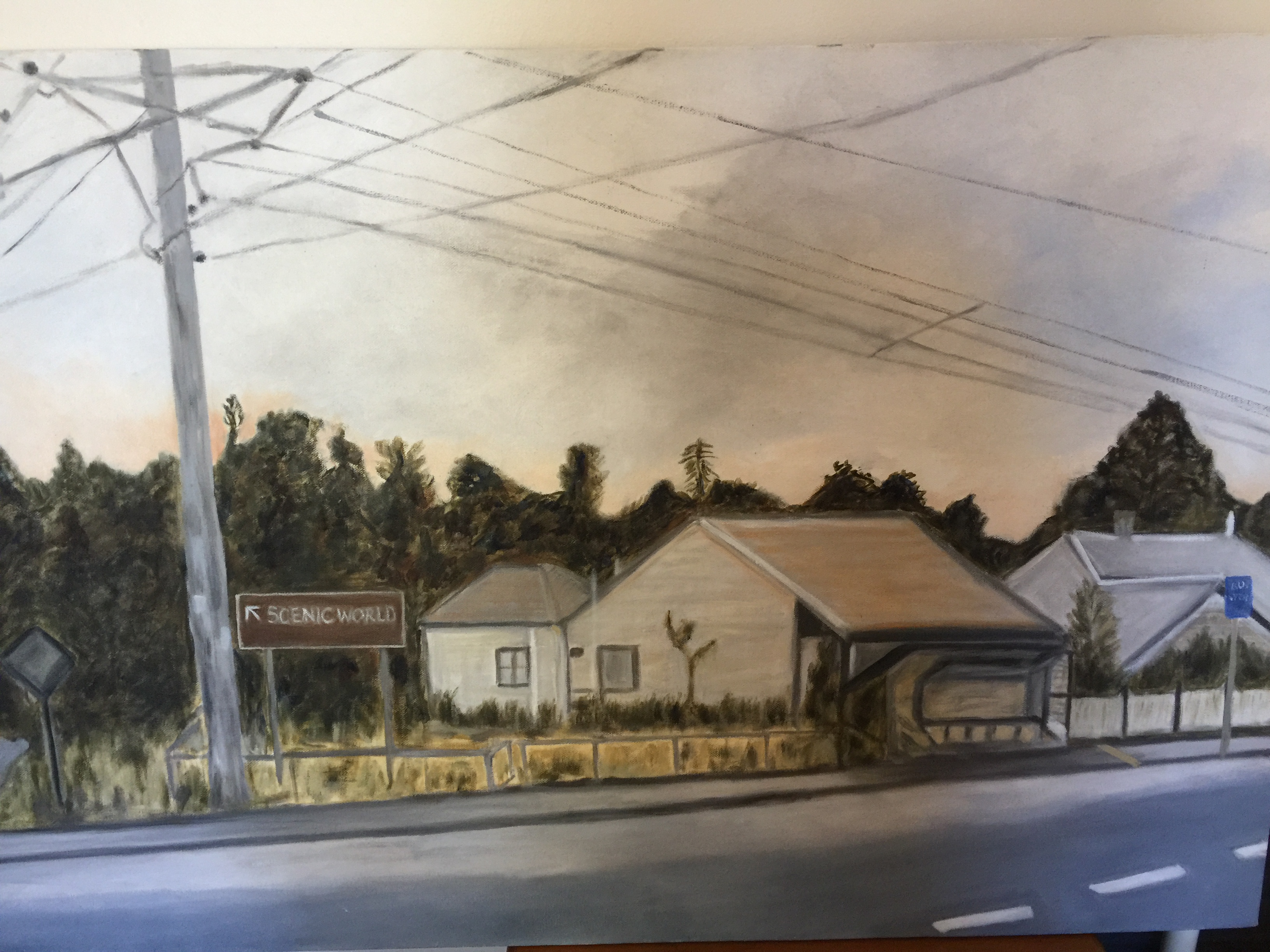
Unfortuately I really want to finish my K-Town series, and as it is in oils unless I work on it in the dark and cold garage. There are several unfinished canvases, and a couple I hadn’t yet started. Together they would make a great series or show, but I need the right space to finish them in.
Scenic World, 2015. Annette Hamilton from the K-Town Series.
I could write the history of my frustrated artistic efforts through a memoir of my studios. The Petersham studio was by far the best of all and I did good work there, but even so it was noisy and the oily dust from Parramatta Road got all over everything. Still, I was sorry to leave it. Hard to believe that whole space is no longer inhabited by any of us who were there for so many years.
The Petersham studio: packed up, ready to say farewell, 2017.
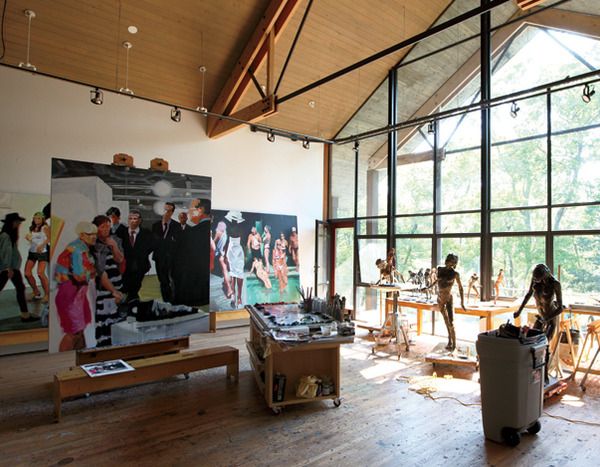
Heroic works and heroic spaces:
Eric Fischl’s studio: height, space, light, the life sized mannequins.
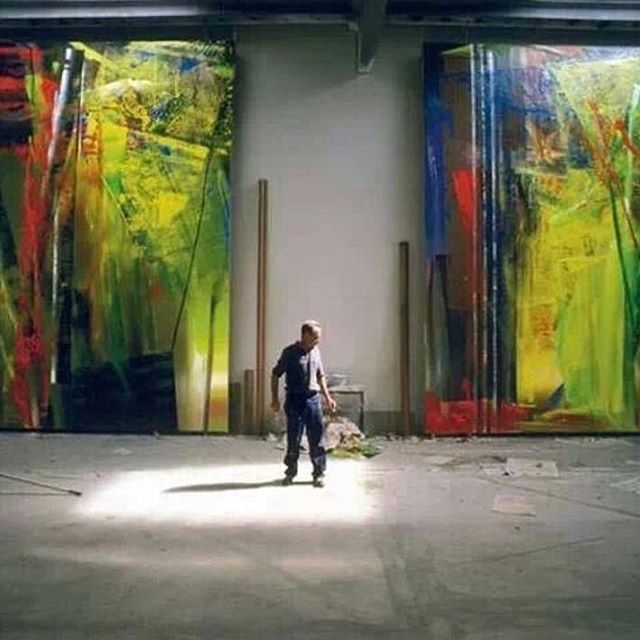
Gerhard Richter’s Dusseldorf studio: the Abstrakts
And, in contrast, the quiet domestic intimacy of Elisabeth Cummings’ studio at Wedderburn:
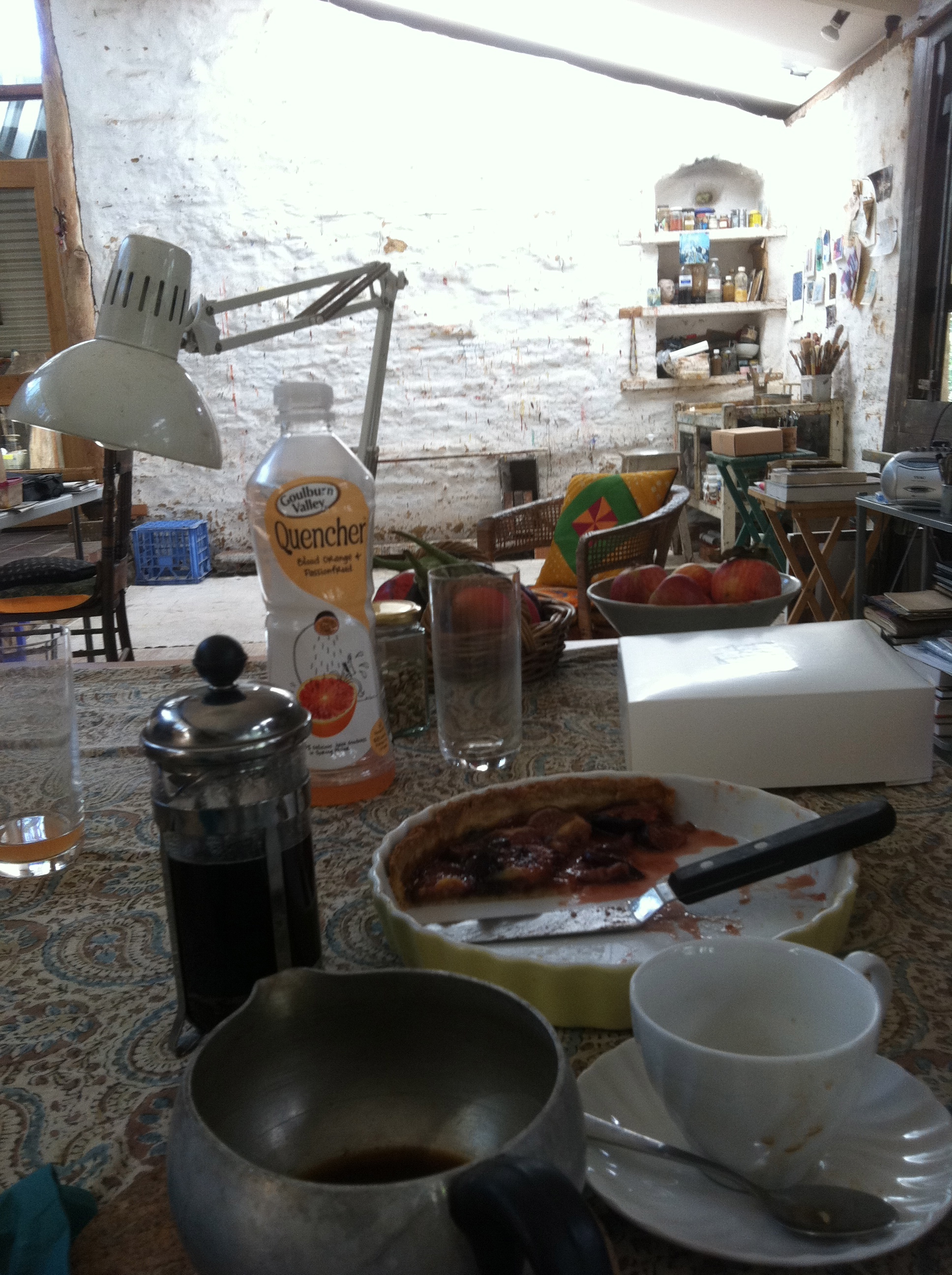
Elisabth’s studio at Wedderburn: after lunch (Photo; AH).
It’s been a long silence I know. I closed up my Sydney studio and stopped painting, and writing about painting, while I focussed on getting some creative writing out into the ebook world. Two down and two to go in the next couple of months, I hope. Visit the Writing Zone for more on that.
So looking forward to the Gerhard Richter at QAGOMA in a few weeks. Was too late to get tickets to the one day seminar. It looks like a great program overall, although some seriously important work is missing. Apparently it was not possible to get the Baader-Meinhof works, and not sure how much of the 60s monochrome will make it either. It is going to be interesting going back to my earlier thoughts on Richter in the light of the exhibition. Every possible thanks and gratitude to the curators at Queensland, may they receive all praise for actually getting this to happen. More on Richter-related matters soon.
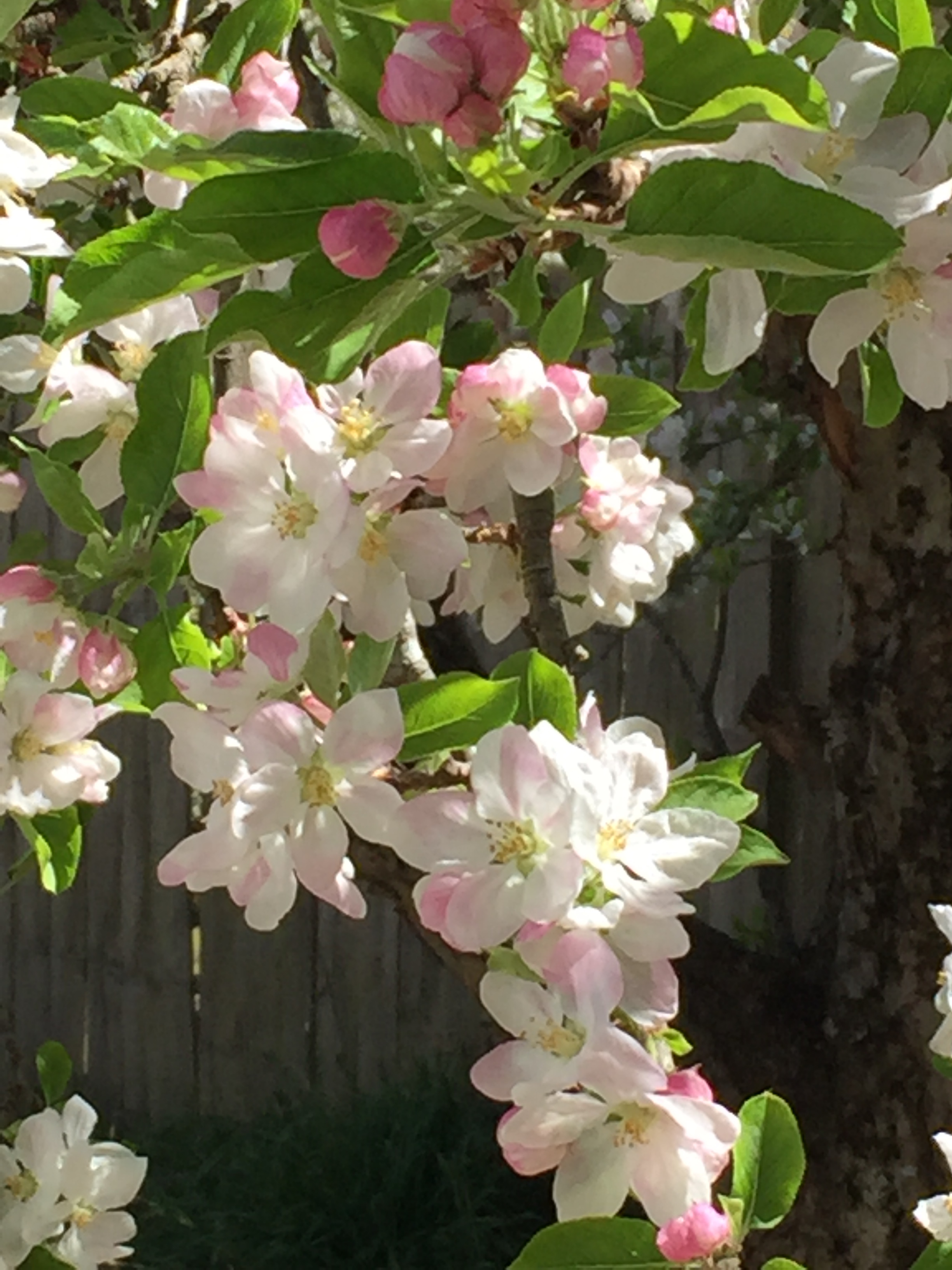
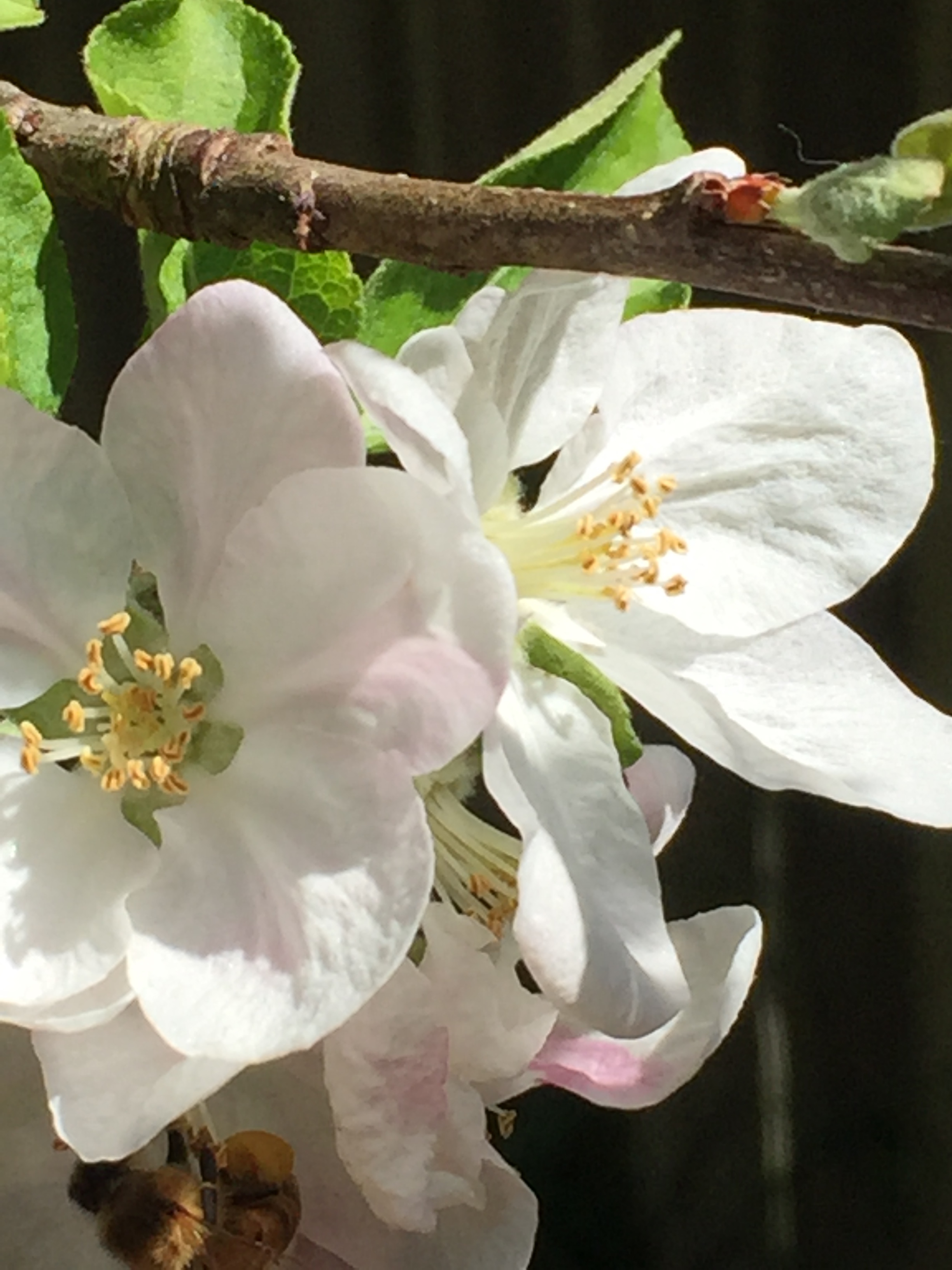
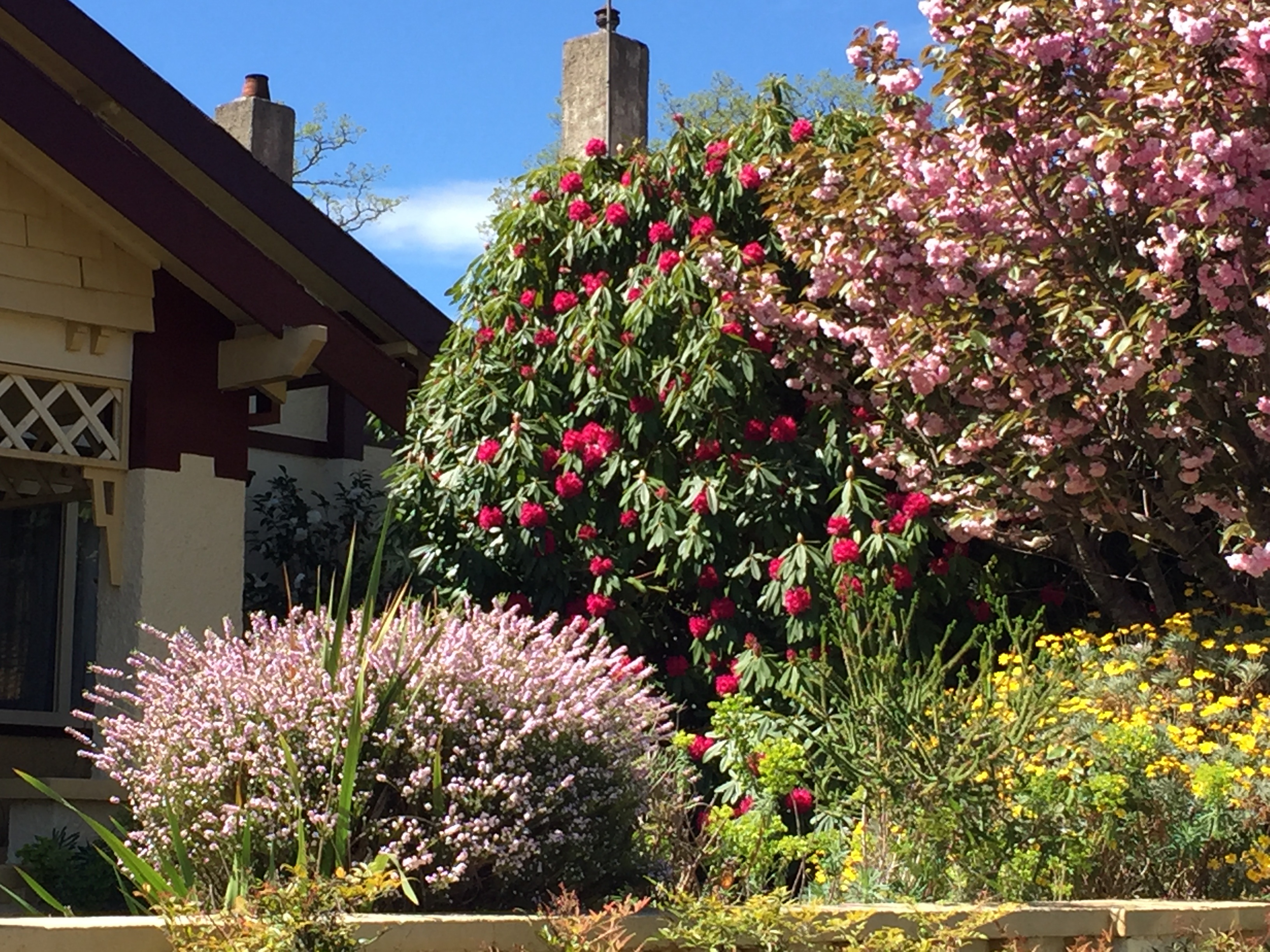
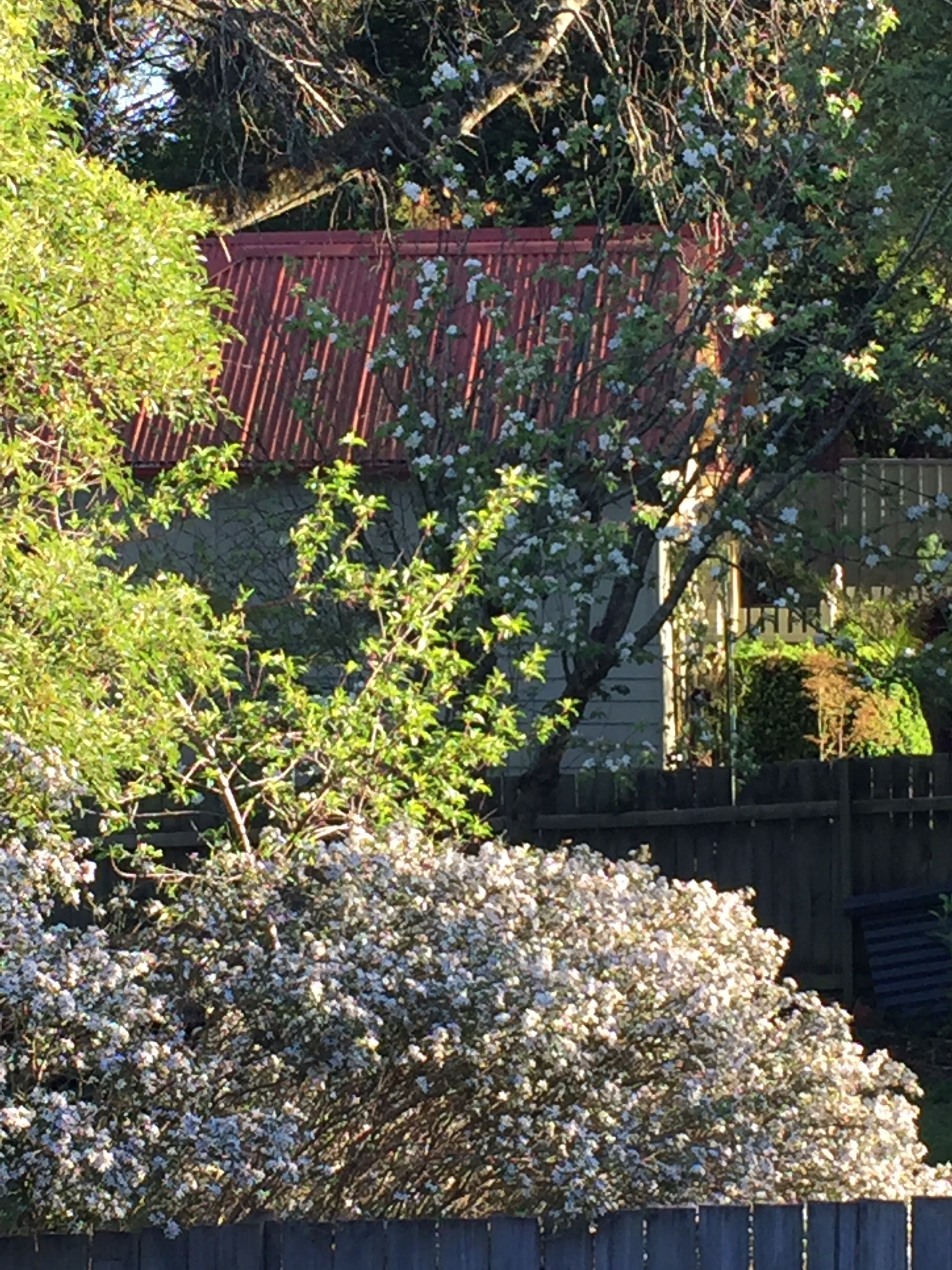
Meanwhile, spring has brought the most stunning sights to our gardens. I’ve always been fascinated by flower painting, but cringed sometimes at the way it so easily becomes twee and decorative. The formalism of the Dutch flower painters is fascinating but so close to mortuary in its stillness. What I saw in the gardens this year was vivid activity and movement, bees sweeping in and out of the trees, wind blowing tiny blossoms everywhere so they covered the grey concrete paths. Maybe I should experiment. These are all photographs taken casually in one or other of our gardens in the Blue Mountains, just in the past couple of weeks. Another Mountains project? Colour? Contrast? Form? Very different from the bush monochromes I was beginning to work on.
READERS PLEASE NOTE: IN THE ORIGINAL VERSION OF THIS BLOG POST I INCLUDED IMAGES OF THE RICHARD PRINCE PHOTOGRAPHS AT THE CENTRE OF THE CASE. These are widely published and included in many discussions of the appropriation issue. However, the images were all removed from the post. I find it very interesting that it is not possible to discuss the issue using the examples of the images which caused the problem in the first place.
In the discussion which follows, a small icon appears at the points where I reproduced the images, with a brief reference attached. However the icon does not lead to anything. The use of these images should be regarded as Fair Dealing for the purposes of review and analysis – see the discussion below. However … if you want to know more about what Prince actually did, you’ll have to search through the many online images which are freely available, though many are without context or explanatory discussion. For reproduction of the main images at issue go to: https://hyperallergic.com/107150/the-art-of-art-lawsuits/
—————————————————————————————–
Appropriation art takes a piece of existing art work, borrows and transforms it. The end product is obviously not a copy, since the purpose of the artist is to create something new and notably different. No-one would mistake the new piece for the original although it will be obvious what it is. All those famous comic pictures of the Mona Lisa with a moustache, or in disguise, are a commonplace example. How far can appropriation art go and still stay within the boundaries of the law? This question has been tested recently especially with regard to the works of Richard Prince.
In US copyright law a Fair Use test exists to determine the legitimate re-use of someone else’s works including photographic works. It consists of a number of elements which singly or in combination can give protection to someone wishing to re-use another’s work.
There are four factors in the test. Only a Federal Court judge can give a definitive answer on whether a particular use meets that test. The four factors are:
The purpose and character of the use
The nature of the copyrighted work
The amount and substantiality of the portion taken
In 2000 French photographer Patrick Cariou published a book, Yes Rasta (Powerhouse) about the lives of Rastafarians. His striking photographs were the main element of the book.
Portrait, from “Yes Rasta”. Republished in the NY Times, from Cariou’s blog.
In 2008 artist Richard Prince created a series of 30 art works which were based on Cariou’s paintings for a show, “Canal Zone”, at New York’s prestigious Gargosian Gallery. In 2009 Cariou brought a copyright infringement suit against Prince, his gallerist and the publisher of the exhibition catalogue. In March 2011 US District Judge Deborah Batts ruled against Prince and ordered the defendants to destroy remaining copies of the catalogue and the unsold paintings which were closely based on Cariou’s photographs.
Cariou’s original photograph at left; Prince’s modification at right.
The decision was overturned on appeal in 2013, except for five paintings which were referred for further evaluation of claims of Fair Use.
The argument in favour of Prince was supported by the Andy Warhol Foundation for the Visual Arts. Along with the Robert Rauschenberg Foundation they argued that the intellectual content and aesthetic meaning of a work of art is not always visible outside of art-historical context. The court decided that the case would depend on whether or not a reasonable observer would find Prince’s works to have been transformative, and thus protected under Fair Use. Because the case for the five paintings was settled out of court there was no legal ruling on them which has been seen as a loss for those seeking clarity in the operation of the law with regard to appropriation art.
In the latest copyright suit against Prince, photographer Donald Graham has claimed that Prince used a photograph of a Rastafarian which he took. The photograph was used in Prince’s 2014 Gargosian exhibition “New Portraits” which present prints of other people’s Instagram posts with comments.
Grahamn’s original at left: Prince’s version at rightPart of Prince’s “New Portraints” exhibition: the Graham photograph in context.
This case differs from Cariou’s in several respects. In terms of the fourth element, the market infringement test, Cariou had made no fine art prints of his work and had not exhibited them as prints. But in the Graham case, the photographer has ONLY sold his work as prints and has never licenced the copyrighted photograph or made it available for any commercial purpose other than sale to fine art collectors. Another element of Fair Use relates to whether or not it has been used for commentary. In the present case the new photographs may be thought to be commenting on the way social media is intersecting with photography.
Another factor is the amount of copyrighted work taken. In this case, the photograph uses almost all of Graham’s image. There is a change in the framing and presentation. Moreover, the image, and the others appropriated for the show, is a striking and compelling image. It is not just the random snappings of amateurs.
However others disagree. Conceptual and appropriation art cannot be judged only on its formal and aesthetic qualities. One NYU law professor says it is “the art-law equivalent of Zombie Formalism”.
The rise and rise of Zombie Formalism – or is it just The Blur?
[Zombie Formalism is a new art movement based on the long discarded principles of Clement Greenberg. For a discussion see an upcoming post].
Also the market test is different because Graham has a track record as a fine art and commercial photographer and makes his living from those photographic activities. If the court finds in favour of Prince, it profoundly affects the concept of copyright in photography and maybe other forms of art.
CONCLUSION: Appropriation art has increased in the Fine Art field at a rapid pace in recent years. Cases such as those of Richard Prince described above serve to highlight the extremely uncertain situation of current copyright law and tests of Fair Use. The fact that each nation has its own Copyright law makes it even more complicated when cross-national jurisdictions must decide what is legal and what is not and even then cannot necessarily impose any penalties.
UPDATE: I am doing some research at present regarding the Australian law regarding the use of others’ photographs/paintings in fine art. This is a difficult issue given the increasing popularity of original paintings referencing other Australian artists and their work. It is estimated that there are hundreds (or more) of such paintings now in circulation in the secondary market. Some of these may be deliberate fakes, but others are works done using the styles and techniques of well-know contemporary artists. The question of what constitutes a “copy” is very unclear.
Recently a Victorian court quashed the conviction of two painters who were said to have created imitation Brett Whiteleys, for instance.
In reproducing an image of this allegedly “fake” painting here, without permission, I may also be offending against copyright law. If the painting in question is indeed a deliberate fake, is it nonetheless covered by existing copyright law?
Big Blue, Lavender Bay: Allegedly a fake Brett Whitely painting, but a court cleared the painter and the dealer in 2017.








 His striking photographs were the main element of the book.


 Annette Hamilton Art Writing from Australia